
汉堡菜单图标菜单关闭图标

Circle of Support

As shared by Deborah Crossman

layer 41

When my son Maxwell was born, he was diagnosed with a brain disorder called PVL (periventricular leukomalacia), cerebral palsy, and epilepsy.

Now, three years in, I can confidently say: he’s an amazing kid and I am so proud to be his mom, but the beginning of our journey was fraught with challenges – and so much anger.

Maxwell was born with complications, but it took three months to receive a diagnosis. He was still in the NICU when I received a call from the neurologist. She told me about the diagnosis, and I started yelling, “What did you do to him? What did the hospital do to my baby?” As she explained the impact of PVL, I threw my phone, I was just so angry and pained. 

I struggled with anger at myself, wondering what I did wrong, and why I deserved this.

Three years later, there are still many challenges, but I’m so happy to be Maxwell’s mom. He’s changed my life and I know I am the best person in the world to be responsible for his care – there’s nothing I wouldn’t do for him.

I still break down sometimes. I’m often mentally and physically exhausted, and it can be hard when I see children his age running, chatting, enjoying activities, and I’m reminded of all the milestones he hasn’t reached. 

But overall, I simply feel so blessed and so happy to have him as my child.

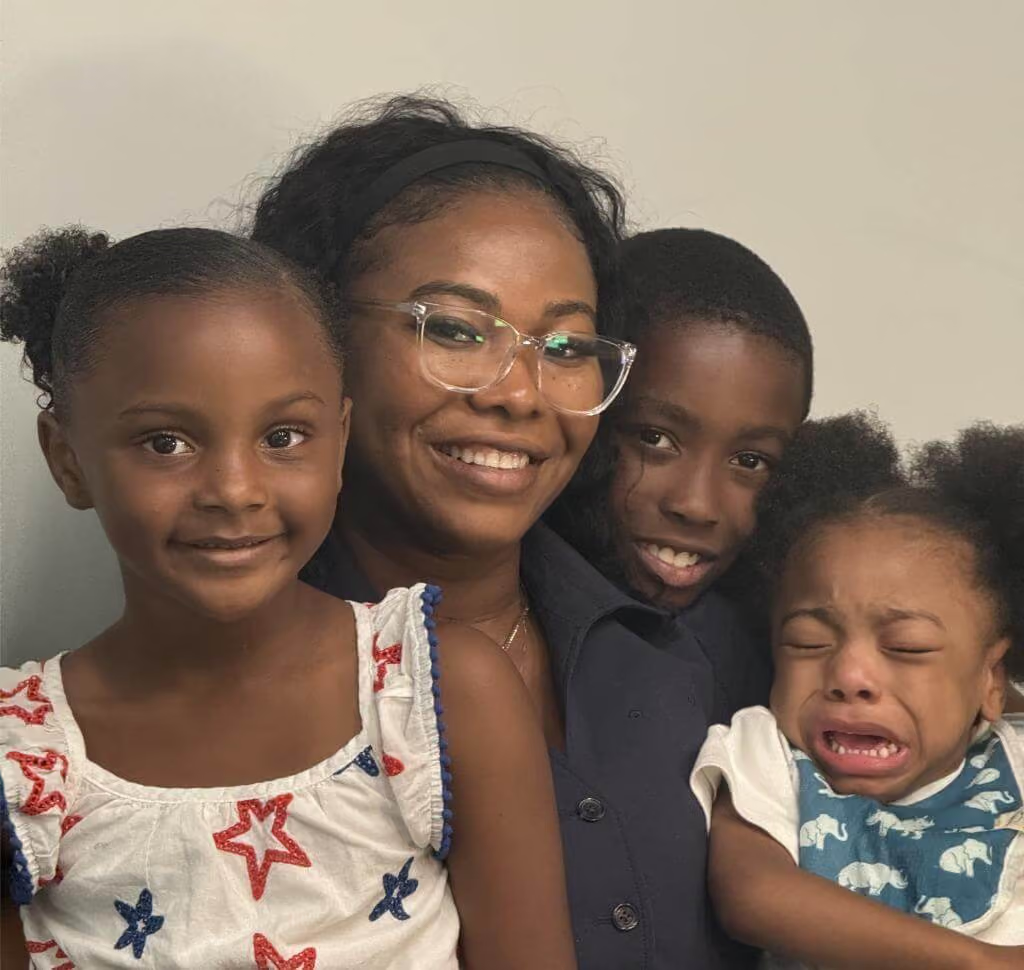
A more recent challenge that I’m learning to navigate involves my other children – Cain (7) and Asada (6) – asking questions like, “Is Maxwell going to be a baby even when he’s 21?” Answering those tough questions and helping my children understand their brother’s differences isn’t easy. I also gave up my full-time job and had to put my education on hold.

When I stopped working to care for Maxwell and realized how quickly his needs would dry up my savings, I was completely overwhelmed; I had no idea what to do. I reached out to the hospital, which connected me with a social worker. 

I was told about OPWDD and other government programs that could provide financial and practical support. Ultimately, I chose to receive my services from Hamaspik, and I’m just so glad I did. It’s been transformative for me to connect with caseworkers who are mothers like me – some with special needs children of their own – and to receive the support of our DSP workers. 

For me, respite services make the saying, “it takes a village to raise a child” come alive. It’s a helping hand, a circle of support from people who feel like sisters.

Ultimately, these kids are called special because they are. Maxwell has changed me, humbled me, and slowed me down. This journey’s been hard, but the gains outweigh the pain. It has made me more compassionate, more motivated to help others. Because of Maxwell, I went back to school and am graduating as an RN – I’ll be another caring nurse out there to make a difference to kids like Maxwell.

My other kids have developed such incredibly mature perspectives because of Maxwell. They’re compassionate and kind. Cain helps weaker students in his class, and Asada is so affectionate with Maxwell. They both sing to him and help care for him.

My message to anyone who is struggling would be to acknowledge that there’s so much pain, and blocks that can deter you from seeking help, but the right support is a lifeline.

When you look for it, you can see that there’s more good than bad in the world, and when you connect with the right people, you’ll feel like you’re at home.

I know that G-d would never give me more than I can handle, and it can take time to see it – but challenges are blessings in disguise.

layer 36
asset 31
layer 37
asset 32
layer 38
asset 33
layer 36
asset 31
layer 37
asset 32
layer 38
asset 33
layer 36
asset 31
layer 37
asset 32
layer 38
asset 33
layer 37
asset 32
layer 38
asset 33
layer 38
asset 32

听觉灵敏度

我的孩子对大声的声音很敏感
(例如,警报器、吸尘器)。

我的孩子会寻找特定的声音或音乐类型,听它们时会显得更加平静。

触觉灵敏度

我的孩子对衣服上的某些面料或标签感到刺激。

我的孩子似乎对通常很痛苦的感觉或对极端温度漠不关心。

视觉灵敏度

我的孩子对明亮或闪烁的灯光很敏感。

我的孩子倾向于避免眼神交流。

味觉/气味敏感度

我的孩子经常喜欢平淡的食物,拒绝口味或香料浓烈的食物。

我的孩子会寻找强烈或不寻常的气味,例如嗅探食物或物体。

本体感受灵敏度

我的孩子更喜欢紧紧的拥抱或被包裹在毯子里。

我的孩子不知道太空中的身体位置(例如,经常碰到东西)。

社交敏感度

我的孩子在拥挤的空间里变得焦虑或痛苦。

我的孩子对攀岩或平衡活动(例如丛林体育馆、跷跷板)犹豫不决或不愿意。

运动灵敏度

我的孩子不喜欢快速或旋转的动作

前庭敏感度

我的孩子在拥挤的空间里变得焦虑或痛苦。

我的孩子对攀岩或平衡活动(例如丛林体育馆、跷跷板)犹豫不决或不愿意。

Please answer all questions before submitting.

Your Child’s Score is

  • 0-15

    感官灵敏度低

  • 16-30

    中等感官敏感度

  • 31-45

    感官灵敏度高

  • 46-60

    非常高的感官灵敏度

0-15:感官敏感度低

  • 口译: 你的孩子表现出低水平的感官敏感度,通常处于典型的发育范围内。
  • 推荐: 通常不令人担忧。如果您有特定的担忧或发现行为突然改变,请咨询医疗保健专业人员进行全面评估。
  • 0-15

    感官灵敏度低

  • 16-30

    中等感官敏感度

  • 31-45

    感官灵敏度高

  • 46-60

    非常高的感官灵敏度

16-30:中等感官敏感度

  • 口译: 你的孩子表现出中等的感官敏感度,这可能需要干预。
  • 推荐:考虑感官友好型活动、感官敏感玩具或感官敏感衣物,例如降噪耳机和加重毛毯,以提高舒适度。如果症状持续存在,请咨询医疗保健专业人员。
  • 0-15

    感官灵敏度低

  • 16-30

    中等感官敏感度

  • 31-45

    感官灵敏度高

  • 46-60

    非常高的感官灵敏度

31-45:高感官灵敏度

  • 口译: 你的孩子的感官敏感度高于平均水平,可能会干扰日常功能。
  • 推荐: 寻求医疗保健专业人员的详细评估,以了解感官整合疗法的选择和潜在的环境变化。
  • 0-15

    感官灵敏度低

  • 16-30

    中等感官敏感度

  • 31-45

    感官灵敏度高

  • 46-60

    非常高的感官灵敏度

46-60:非常高的感官灵敏度

  • 口译: 你的孩子表现出很高的感官敏感度,可能会严重干扰日常生活。
  • 推荐:如果你的孩子表现出这种感官敏感度,强烈建议你咨询医疗保健专业人员进行多学科评估。您可能会被引导到早期干预计划和专业支持。

How OPWDD Evaluations Work: A Step-by-Step Guide

Social Scripts for Kids at Family Gatherings

Hands Full Parenting: Growing Through Adolescence

Recognizing CVI: Ten Characteristics

Understanding CVI

Sight Unseen

Inclusion Without Overwhelm

To Tell or Not to Tell

Rose Colored Glasses

夏天的秘密技能

识别自闭症的早期迹象

来自上方的拥抱

为有特殊需要的孩子准备智能简便的夏令营

通往潜力的途径第 4 部分

光谱的颜色

有特殊需要的孩子一起郊游的基本指南

通往潜力的途径第 3 部分

如何获得 OPWDD 批准?

室内冬季感官探险

定义 IDD 级别和严重性

智障人士的生活技能

Sensory-Smart 礼物指南

脊柱裂:早期干预

没什么好隐瞒的

通往潜在之路第 2 部分

Yom Tov 过渡变得简单

纽约市最畅玩的冒险之旅

Yom Tov 育儿生存指南

了解 OPWDD 资格:你需要知道的

直接支持专业人员如何提高生活质量

什么是Com Hab,它如何提供个性化支持?

临时护理对有特殊需要的孩子的家庭的6大好处

对开学第一天的鼓励

什么是脊柱裂?概述

我在荷兰的生活

促进缺碘症患儿的独立性

了解 IDD

什么是癫痫?

定义阅读障碍的症状

通往潜在之路第 1 部分

了解唐氏综合症

唐氏综合症的早期干预

我们的过山车之旅

了解脑瘫

了解自闭症

自闭症支持

感官处理灵敏度测试

解码诊断测试

儿童成长清单

增强情商

管理恐慌发作

了解社交焦虑症

面对童年创伤

如何支持患有焦虑症的家庭成员

了解分离焦虑 |

了解创伤后应激障碍(PTSD)

精神障碍预防

对抗老年人的抑郁症

了解抑郁症

了解焦虑

成人注意力缺陷多动障碍行动计划

焦虑儿童的睡眠策略

How OPWDD Evaluations Work: A Step-by-Step Guide

Recognizing CVI: Ten Characteristics

Understanding CVI

Sight Unseen

To Tell or Not to Tell

Rose Colored Glasses

识别自闭症的早期迹象

脊柱裂:早期干预

食物过敏儿童家长烹饪指南

唐氏综合症的早期干预

了解语音和语言发展

焦虑儿童的睡眠策略

感官处理灵敏度测试

喂你的挑食者

简单的感官活动

解码诊断测试

儿童成长清单

类别

未找到任何物品。
未找到任何物品。
未找到任何物品。

关键词