

Hamburger Menu IconMenu Close Icon

Circle of Support

As shared by Deborah Crossman

layer 41

When my son Maxwell was born, he was diagnosed with a brain disorder called PVL (periventricular leukomalacia), cerebral palsy, and epilepsy.

Now, three years in, I can confidently say: he’s an amazing kid and I am so proud to be his mom, but the beginning of our journey was fraught with challenges – and so much anger.

Maxwell was born with complications, but it took three months to receive a diagnosis. He was still in the NICU when I received a call from the neurologist. She told me about the diagnosis, and I started yelling, “What did you do to him? What did the hospital do to my baby?” As she explained the impact of PVL, I threw my phone, I was just so angry and pained. 

I struggled with anger at myself, wondering what I did wrong, and why I deserved this.

Three years later, there are still many challenges, but I’m so happy to be Maxwell’s mom. He’s changed my life and I know I am the best person in the world to be responsible for his care – there’s nothing I wouldn’t do for him.

I still break down sometimes. I’m often mentally and physically exhausted, and it can be hard when I see children his age running, chatting, enjoying activities, and I’m reminded of all the milestones he hasn’t reached. 

But overall, I simply feel so blessed and so happy to have him as my child.

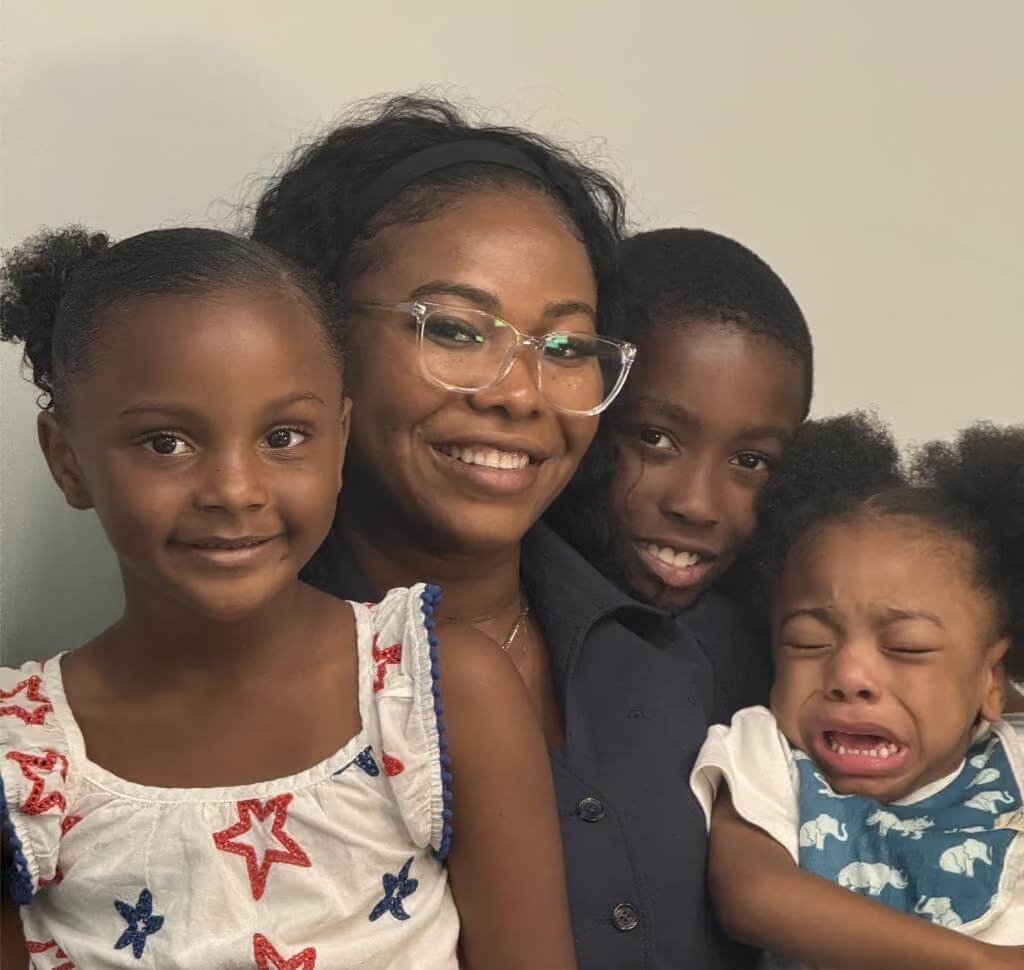
A more recent challenge that I’m learning to navigate involves my other children – Cain (7) and Asada (6) – asking questions like, “Is Maxwell going to be a baby even when he’s 21?” Answering those tough questions and helping my children understand their brother’s differences isn’t easy. I also gave up my full-time job and had to put my education on hold.

When I stopped working to care for Maxwell and realized how quickly his needs would dry up my savings, I was completely overwhelmed; I had no idea what to do. I reached out to the hospital, which connected me with a social worker. 

I was told about OPWDD and other government programs that could provide financial and practical support. Ultimately, I chose to receive my services from Hamaspik, and I’m just so glad I did. It’s been transformative for me to connect with caseworkers who are mothers like me – some with special needs children of their own – and to receive the support of our DSP workers. 

For me, respite services make the saying, “it takes a village to raise a child” come alive. It’s a helping hand, a circle of support from people who feel like sisters.

Ultimately, these kids are called special because they are. Maxwell has changed me, humbled me, and slowed me down. This journey’s been hard, but the gains outweigh the pain. It has made me more compassionate, more motivated to help others. Because of Maxwell, I went back to school and am graduating as an RN – I’ll be another caring nurse out there to make a difference to kids like Maxwell.

My other kids have developed such incredibly mature perspectives because of Maxwell. They’re compassionate and kind. Cain helps weaker students in his class, and Asada is so affectionate with Maxwell. They both sing to him and help care for him.

My message to anyone who is struggling would be to acknowledge that there’s so much pain, and blocks that can deter you from seeking help, but the right support is a lifeline.

When you look for it, you can see that there’s more good than bad in the world, and when you connect with the right people, you’ll feel like you’re at home.

I know that G-d would never give me more than I can handle, and it can take time to see it – but challenges are blessings in disguise.

layer 36
asset 31
layer 37
asset 32
layer 38
asset 33
layer 36
asset 31
layer 37
asset 32
layer 38
asset 33
layer 36
asset 31
layer 37
asset 32
layer 38
asset 33
layer 37
asset 32
layer 38
asset 33
layer 38
asset 32

Auditory Sensitivity

My child is sensitive to loud noises
(e.g., sirens, vacuum cleaner).

My child seeks out specific sounds or types of music and appears calmer when listening to them.

Tactile Sensitivity

My child is irritated by certain fabrics or tags in clothing.

My child seems indifferent to sensations that are usually painful or to extreme temperatures.

Visual Sensitivity

My child is sensitive to bright or flashing lights.

My child tends to avoid eye contact.

Taste/Smell Sensitivity

My child constantly prefers bland foods and rejects foods with strong flavors or spices.

My child seeks out strong or unusual smells, such as sniffing food or objects.

Proprioceptive Sensitivity

My child prefers tight hugs or being wrapped in a blanket.

My child is unaware of body position in space (e.g., often bumps into things).

Social Sensitivity

My child becomes anxious or distressed in crowded spaces.

My child is hesitant or resistant to climbing or balancing activities (e.g., jungle gyms, see-saws).

Movement Sensitivity

My child dislikes fast or spinning movements

Vestibular Sensitivity

My child becomes anxious or distressed in crowded spaces.

My child is hesitant or resistant to climbing or balancing activities (e.g., jungle gyms, see-saws).

Please answer all questions before submitting.

Your Child’s Score is

  • 0-15

    Low Sensory Sensitivity

  • 16-30

    Moderate Sensory Sensitivity

  • 31-45

    High Sensory Sensitivity

  • 46-60

    Very High Sensory Sensitivity

0-15: Low Sensory Sensitivity

  • Interpretation: Your child exhibits low levels of sensory sensitivity, usually falling within the typical developmental range.
  • Recommendation: Generally not  a cause for concern. If you have specific worries or notice a sudden change in behavior, consult a healthcare professional for a comprehensive evaluation.
  • 0-15

    Low Sensory Sensitivity

  • 16-30

    Moderate Sensory Sensitivity

  • 31-45

    High Sensory Sensitivity

  • 46-60

    Very High Sensory Sensitivity

16-30: Moderate Sensory Sensitivity

  • Interpretation: Your child displays moderate sensory sensitivity, which may warrant intervention.
  • Recommendation: Consider sensory-friendly activities, sensory sensitive toys, or sensory sensitive clothing like noise-canceling headphones and weighted blankets to improve comfort. If symptoms persist, consult health care professionals.
  • 0-15

    Low Sensory Sensitivity

  • 16-30

    Moderate Sensory Sensitivity

  • 31-45

    High Sensory Sensitivity

  • 46-60

    Very High Sensory Sensitivity

31-45: High Sensory Sensitivity

  • Interpretation: Your child has higher than average sensory sensitivity that may interfere with daily functioning.
  • Recommendation: Seek a detailed evaluation by health care professionals for sensory integration therapy options and potential environmental modifications.
  • 0-15

    Low Sensory Sensitivity

  • 16-30

    Moderate Sensory Sensitivity

  • 31-45

    High Sensory Sensitivity

  • 46-60

    Very High Sensory Sensitivity

46-60: Very High Sensory Sensitivity

  • Interpretation: Your child demonstrates high levels of sensory sensitivity that could significantly interfere with daily life.
  • Recommendation: If your child displays this level of sensory sensitivity, it’s highly recommended that you consult with a health care professional for a multi-disciplinary assessment. You will probably be directed towards early intervention programs and specialized support.

How OPWDD Evaluations Work: A Step-by-Step Guide

Social Scripts for Kids at Family Gatherings

Hands Full Parenting: Growing Through Adolescence

Never Say Never

Recognizing CVI: Ten Characteristics

Understanding CVI

Sight Unseen

Inclusion Without Overwhelm

To Tell or Not to Tell

Rose Colored Glasses

Summer’s Secret Skills

Recognizing Early Signs of Autism

A Hug from Above

Smart, Simple Camp Prep for Kids With Special Needs

Hands Full Parenting: Sibling Rivalry & Negative Behavior

The Colors of the Spectrum

The Essential Guide to Outings with Kids with Special Needs

Hands Full Parenting: Navigating Tantrums

How Do I Get OPWDD Approval?

Indoor Winter Sensory Adventures

Defining IDD Levels and Severity

Life Skills for Individuals with Intellectual Disabilities

The Sensory-Smart Gift Guide

Spina Bifida: Early Intervention

Nothing to Hide

Hands Full Parenting: Aggression & Emotional Health

Yom Tov Transitions Made Easy

NYC’s Top Accessible Adventures

The Yom Tov Parenting Survival Guide

Understanding OPWDD Eligibility: What You Need to Know

How Direct Support Professionals Enhance Quality of Life

What Is Com Hab and How Does It Provide Individualized Support?

6 Benefits of Respite Care for Families of Kids with Special Needs

Encouragement for the First Day of School

What is Spina Bifida? An Overview

My Life in Holland

Fostering Independence in Children With IDD

Understanding IDD

What is Epilepsy?

Defining Signs of Dyslexia

Hands Full Parenting: Becoming the Therapist I Needed

Understanding Down Syndrome

Early Intervention for Down Syndrome

Our Roller Coaster Ride

Understanding Cerebral Palsy

Understanding Autism

Autism Support

Sensory Processing Sensitivity Test

Decoding Diagnostic Tests

The Ultimate Child Development Checklist

Empowering Emotional Intelligence

Managing Panic Attacks

Understanding Social Anxiety Disorder

Confronting Childhood Trauma

How to Support a Family Member with Anxiety

Understanding Separation Anxiety

Understanding Post Traumatic Stress Disorder (PTSD)

Mental Health Disorder Prevention

Combating Depression in the Elderly

Understanding Depression

Understanding Anxiety

Adult ADHD Action Plan

Helping Kids Sleep Better: Sleep Strategies for Anxiety

How OPWDD Evaluations Work: A Step-by-Step Guide

Recognizing CVI: Ten Characteristics

Understanding CVI

Sight Unseen

To Tell or Not to Tell

Rose Colored Glasses

Recognizing Early Signs of Autism

Spina Bifida: Early Intervention

A Parent's Guide to Cooking for Kids With Food Allergies

Early Intervention for Down Syndrome

Understanding Speech and Language Development

Helping Kids Sleep Better: Sleep Strategies for Anxiety

Sensory Processing Sensitivity Test

Strategies for Feeding a Picky Eater

Simple Sensory Activities to Try with Your Child

Decoding Diagnostic Tests

The Ultimate Child Development Checklist

Categories