


OPWDD Eligibility and Enrollment
Application and enrollment for a lifetime of OPWDD services

Empowerment for life — tap into the wealth of support available to your child
If you think your child may be eligible for OPWDD services, reach out and we’ll guide you through the enrollment process. A large range of disabilities are considered for OPWDD approval. Common diagnoses are autism, Down syndrome, genetic diseases, intellectual disabilities, and cerebral palsy among others. It’s important to note that often a child who doesn't have a visible disability or a specific diagnosis will still be approved for OPWDD services.
We’ll help you ascertain if they’re likely to be found eligible for OPWDD approval. Once they are, your child will receive services that grow and adapt along with them. As they move toward adulthood, they will continue to receive benefits generally unavailable via health insurance or the Department of Education.
Who is eligible?
Participants must meet these criteria to apply for this service via Hamaspik of Kings County.
Live in NYC or Nassau County
Have an intellectual or developmental disability
Any age
Good things to know:
- Applicants can receive perks from Pillar Support such as free diapers and some support services even before approval. A little taste of the relief to come!
- To be approved for OPWDD services, you must apply before the person turns 22 or have documented proof of disability before that age.
- OPWDD services offer support beyond what the DOE provides for school-age children. Hamaspik can arrange 1:1 support after school and on weekends, and introduce you to many helpful programs.
- Receiving these services will not prevent your child from attending college or getting a driver's license. In fact, it may allow them to get special accommodations.

A weight off their shoulders
Ahuva Breuer, Intake Coordinator, Five Towns
It's unbelievable to feel the excitement from the parents when they hear their child has been approved for OPWDD services and they can finally get the help they need. I can almost feel the weight lifting off their shoulders when I give them the news. This gives me the push to help the next parent — to be there for them throughout the process.
The hearts behind the service
Dini Freund
Director of Intake
“We understand that the intake process can be hard for parents, so we do everything in our power to make it clear and efficient.”
Yehudis Heimfeld
“We educate parents on all different service options available for their specific circumstances. You can literally see the relief of clarity from parents at the end of the phone call."
.webp)
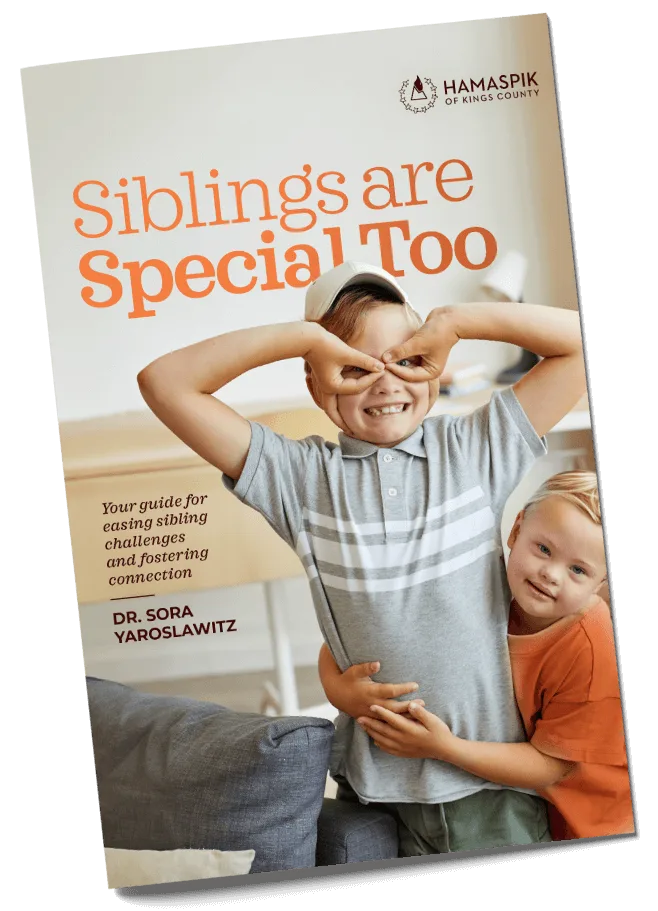
You're doing all you can — and yet you always feel like you're failing someone.
Watching your other children navigate their sibling’s challenges can leave you feeling sad or helpless. This guide by Dr. Sora Yaroslowitz — a parenting expert, and herself the mother of a child with special needs — gives you tested tools to ease resentment and strengthen siblings' connection.
You’ll discover:
• How to respond when a child asks, “Can’t we just be normal?” (and the exact words to help ease their frustration)
• The common mistake parents make when trying to “make it up” to siblings (and what actually works instead)
• Ways to help siblings move from frustration to empathy (illustrated by a powerful real sibling story)