

Hamburger Menu IconMenu Close Icon
Special Needs

Understanding Intervention Options

A guide to common therapies and terms

layer 41

Every child carries unique potential that’s actualized with the right nurture and support. For children with special needs, well-chosen interventions can be especially powerful in supporting their development.

The variety of available therapy options (and their abbreviations) can be overwhelming. This guide offers a clear snapshot of common therapies, so you can feel confident and empowered as you explore what’s best for your child.

Remember, children thrive best when intervention decisions are made in partnership with trusted professionals.

Siblings Guide Cover
Caring for a child with special needs affects everyone.
Our Siblings Are Special Too guide shares ten grounded, actionable ways to support siblings with sensitivity.

EI - Early Intervention

Early intervention is a program for infants and toddlers (birth to 3 years) who have developmental delays or disabilities. It provides a combination of therapies and supports to help children develop critical skills.

When to pursue: Consider EI for concerns around developmental delays in any area – physical, cognitive, communication, social-emotional, or adaptive – detected before age 3. The earlier the intervention, the better the developmental outcomes.

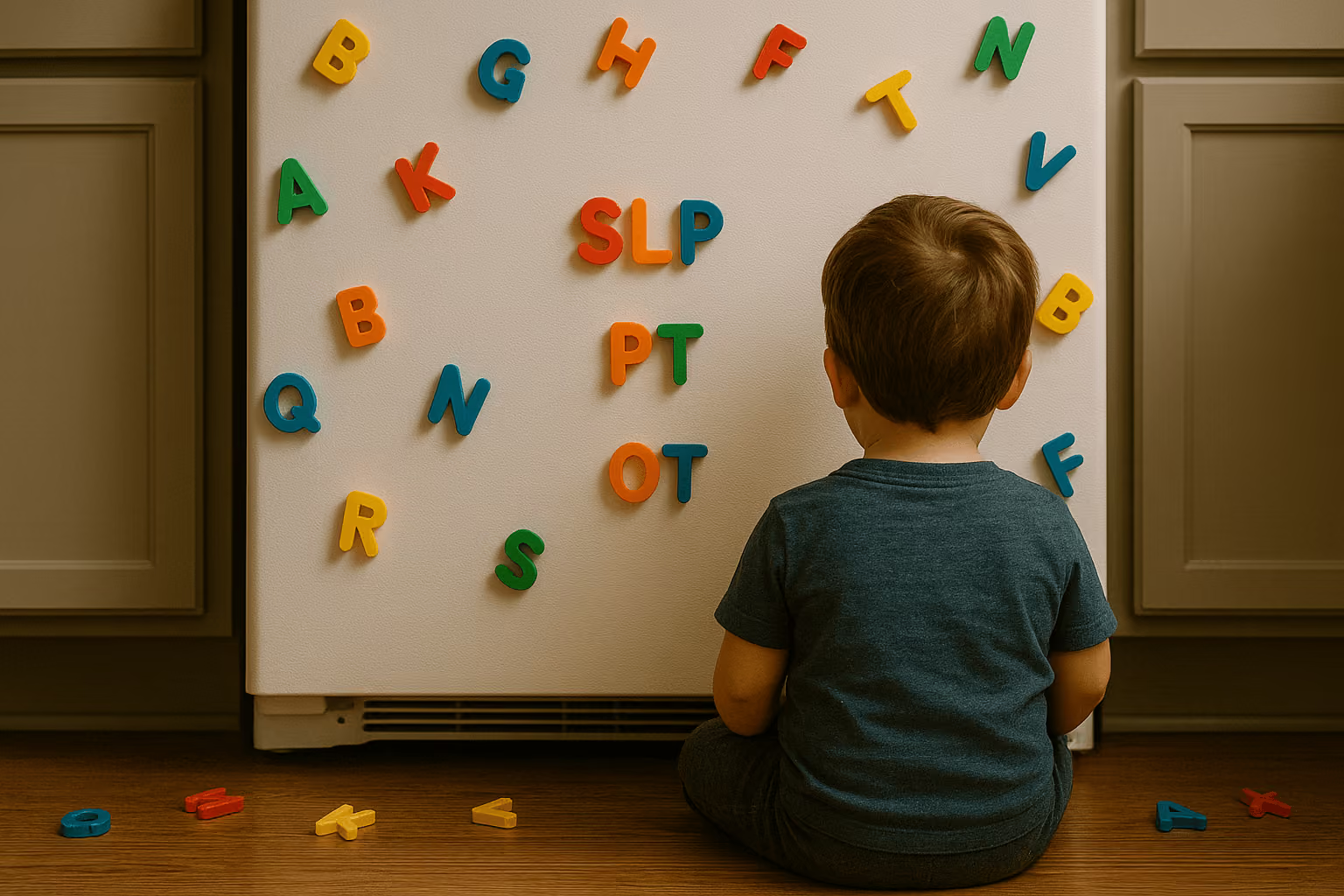
What does it look like? A team of providers (PT, OT, SLP, etc.) coaching the parents and working with the child directly, often by coming into the home or daycare.

ABA - Applied Behavior Analysis

ABA is a widely used therapy, especially for children with autism. It involves breaking down skills into small, manageable steps and teaching them using repetition and reinforcement techniques. The structured approach helps improve social skills, communication, and behavior.

When to pursue? It’s recommended to begin ABA soon after diagnosis or when behavioral and social delays are observed, often starting in early childhood, to maximize outcomes.

What does it look like? ABA uses repetition, prompts, and positive reinforcement, through structured activities or games, puzzles, and role-play.

PT - Physical Therapy

Physical therapy focuses on improving a child's gross motor skills, such as crawling, walking, balance, and coordination to increase mobility and independence in daily activities.

When to pursue: If a child shows delays in motor milestones (sitting, crawling, walking) or has muscle weakness, low tone, or motor coordination difficulties. Therapy can begin in infancy, or whenever challenges emerge.

What does it look like? The therapist uses guided exercises using tools like balance boards, therapy balls, obstacle courses, and resistance bands.

OT - Occupational Therapy

Occupational therapy helps children develop fine motor skills and improve their ability to perform everyday tasks, such as dressing, eating, or writing. OT can also address sensory processing issues to help children better handle everyday sensations.

When to pursue: If delays or difficulties appear in fine motor tasks, sensory sensitivities, or daily living skills. It’s often started when a child is very young, though it can be helpful at any stage when support is needed.

What does it look like? Therapists use small toys like blocks, beads, playdough, crafts, sensory bins, and adaptive tools like non-slip mats, larger utensils and textured grips.

SLP - Speech Language Pathology

Speech therapy assesses and treats speech, language, and communication difficulties. It helps with articulation, fluency, voice, and social communication.

Specialized SLPs can also provide feeding therapy for children who have difficulties with eating and swallowing. They may practice safe swallowing and gradually introduce and build comfort with different textures.

When to pursue: If a child demonstrates delays or difficulties in speech development, language comprehension, feeding, or swallowing, reach out to an SLP. It’s ideal to pursue as young as possible, from early intervention through early childhood.

What does it look like? Practicing sounds, words, and social communication through songs, picture cards, stories, and play; it may also include feeding therapy with textured foods, straws, and safe-swallow strategies.

CCPT - Child-Centered Play Therapy

CCPT is a non-directive therapy where children use play as a natural medium to express feelings and solve problems. The therapist creates a supportive environment and follows the child’s lead, using the play to generate a process of growth and healing.

When to pursue: Play therapy can be beneficial when a child shows emotional or behavioral challenges, difficulty expressing feelings, or after trauma.

What does it look like? Play therapy takes place in a supportive playroom where the child leads with toys, art, and role-play while the therapist reflects, validates, and helps them process emotions.  

SI - Sensory Integration

Sensory integration therapy helps children who struggle to process and respond to sensory information – sights, sounds, touch, movement, and more. It’s often provided by a specially trained occupational therapist.

When to pursue: If a child is overly sensitive or overwhelmed by sounds, textures, or movement; craves constant motion or deep pressure; or has difficulty focusing and regulating emotions because of sensory processing challenges they’ll likely benefit from SI.

What does it look like? The therapist uses play-based activities designed to help the child regulate and organize sensory input, such as swinging, jumping, climbing, using weighted blankets or vests, tactile play with sand, water, or textured bins, and activities that provide deep pressure or joint compression.

There are many more specialized therapies and supports available as your child's needs evolve. Trust your instincts as a parent, ask questions, and build relationships with professionals who truly listen to your concerns.

Your child's path may look different from others, but with the right support team and advocacy, they can reach their fullest potential.

To get support on your child's developmental journey, reach out to our services specialists. Our team will help you understand your eligibility and connect you with the services that are right for you.

layer 36
asset 31
layer 37
asset 32
layer 38
asset 33
layer 36
asset 31
layer 37
asset 32
layer 38
asset 33
layer 36
asset 31
layer 37
asset 32
layer 38
asset 33
layer 37
asset 32
layer 38
asset 33
layer 38
asset 32

Auditory Sensitivity

My child is sensitive to loud noises
(e.g., sirens, vacuum cleaner).

My child seeks out specific sounds or types of music and appears calmer when listening to them.

Tactile Sensitivity

My child is irritated by certain fabrics or tags in clothing.

My child seems indifferent to sensations that are usually painful or to extreme temperatures.

Visual Sensitivity

My child is sensitive to bright or flashing lights.

My child tends to avoid eye contact.

Taste/Smell Sensitivity

My child constantly prefers bland foods and rejects foods with strong flavors or spices.

My child seeks out strong or unusual smells, such as sniffing food or objects.

Proprioceptive Sensitivity

My child prefers tight hugs or being wrapped in a blanket.

My child is unaware of body position in space (e.g., often bumps into things).

Social Sensitivity

My child becomes anxious or distressed in crowded spaces.

Movement Sensitivity

My child dislikes fast or spinning movements

Vestibular Sensitivity

My child is hesitant or resistant to climbing or balancing activities (e.g., jungle gyms, see-saws).

Please answer all questions before submitting.

Your Child’s Score is

  • 0-15

    Low Sensory Sensitivity

  • 16-30

    Moderate Sensory Sensitivity

  • 31-45

    High Sensory Sensitivity

  • 46-60

    Very High Sensory Sensitivity

0-15: Low Sensory Sensitivity

  • Interpretation: Your child exhibits low levels of sensory sensitivity, usually falling within the typical developmental range.
  • Recommendation: Generally not  a cause for concern. If you have specific worries or notice a sudden change in behavior, consult a healthcare professional for a comprehensive evaluation.
  • 0-15

    Low Sensory Sensitivity

  • 16-30

    Moderate Sensory Sensitivity

  • 31-45

    High Sensory Sensitivity

  • 46-60

    Very High Sensory Sensitivity

16-30: Moderate Sensory Sensitivity

  • Interpretation: Your child displays moderate sensory sensitivity, which may warrant intervention.
  • Recommendation: Consider sensory-friendly activities, sensory sensitive toys, or sensory sensitive clothing like noise-canceling headphones and weighted blankets to improve comfort. If symptoms persist, consult health care professionals.
  • 0-15

    Low Sensory Sensitivity

  • 16-30

    Moderate Sensory Sensitivity

  • 31-45

    High Sensory Sensitivity

  • 46-60

    Very High Sensory Sensitivity

31-45: High Sensory Sensitivity

  • Interpretation: Your child has higher than average sensory sensitivity that may interfere with daily functioning.
  • Recommendation: Seek a detailed evaluation by health care professionals for sensory integration therapy options and potential environmental modifications.
  • 0-15

    Low Sensory Sensitivity

  • 16-30

    Moderate Sensory Sensitivity

  • 31-45

    High Sensory Sensitivity

  • 46-60

    Very High Sensory Sensitivity

46-60: Very High Sensory Sensitivity

  • Interpretation: Your child demonstrates high levels of sensory sensitivity that could significantly interfere with daily life.
  • Recommendation: If your child displays this level of sensory sensitivity, it’s highly recommended that you consult with a health care professional for a multi-disciplinary assessment. You will probably be directed towards early intervention programs and specialized support.

Understanding Intervention Options

How OPWDD Evaluations Work: A Step-by-Step Guide

Social Scripts for Kids at Family Gatherings

Hands Full Parenting: Growing Through Adolescence

Never Say Never

Recognizing CVI: Ten Characteristics

Understanding CVI

Sight Unseen

Structure on Days Off

Inclusion Without Overwhelm

To Tell or Not to Tell

Rose Colored Glasses

Summer’s Secret Skills

Recognizing Early Signs of Autism

A Hug from Above

Smart, Simple Camp Prep for Kids With Special Needs

Hands Full Parenting: Sibling Rivalry & Negative Behavior

The Colors of the Spectrum

The Essential Guide to Outings with Kids with Special Needs

Hands Full Parenting: Navigating Tantrums

How Do I Get OPWDD Approval?

Indoor Winter Sensory Adventures

Defining IDD Levels and Severity

Life Skills for Individuals with Intellectual Disabilities

The Sensory-Smart Gift Guide

Spina Bifida: Early Intervention

Nothing to Hide

Hands Full Parenting: Aggression & Emotional Health

Yom Tov Transitions Made Easy

NYC’s Top Accessible Adventures

The Yom Tov Parenting Survival Guide

Understanding OPWDD Eligibility: What You Need to Know

How Direct Support Professionals Enhance Quality of Life

What Is Com Hab and How Does It Provide Individualized Support?

6 Benefits of Respite Care for Families of Kids with Special Needs

Encouragement for the First Day of School

What is Spina Bifida? An Overview

My Life in Holland

Fostering Independence in Children With IDD

Understanding IDD

What is Epilepsy?

Defining Signs of Dyslexia

Hands Full Parenting: Becoming the Therapist I Needed

Understanding Down Syndrome

Early Intervention for Down Syndrome

Our Roller Coaster Ride

Understanding Cerebral Palsy

Understanding Autism

Autism Support

Sensory Processing Sensitivity Test

Decoding Diagnostic Tests

The Ultimate Child Development Checklist

Empowering Emotional Intelligence

Managing Panic Attacks

Understanding Social Anxiety Disorder

Confronting Childhood Trauma

How to Support a Family Member with Anxiety

Understanding Separation Anxiety

Understanding Post Traumatic Stress Disorder (PTSD)

Mental Health Disorder Prevention

Combating Depression in the Elderly

Understanding Depression

Understanding Anxiety

Adult ADHD Action Plan

Helping Kids Sleep Better: Sleep Strategies for Anxiety

Understanding Intervention Options

How OPWDD Evaluations Work: A Step-by-Step Guide

Recognizing CVI: Ten Characteristics

Understanding CVI

Sight Unseen

To Tell or Not to Tell

Rose Colored Glasses

Recognizing Early Signs of Autism

Spina Bifida: Early Intervention

A Parent's Guide to Cooking for Kids With Food Allergies

Early Intervention for Down Syndrome

Understanding Speech and Language Development

Helping Kids Sleep Better: Sleep Strategies for Anxiety

Sensory Processing Sensitivity Test

Strategies for Feeding a Picky Eater

Simple Sensory Activities to Try with Your Child

Decoding Diagnostic Tests

The Ultimate Child Development Checklist

Categories