Hamburger Menu IconMenu Close Icon

Building Structure into Days Without Childcare

A Parents’ Guide

layer 41

It’s there in bold on your calendar: no school, sometimes for several days in a row.

You’re facing a full day with your child, without the usual structure or support, and the familiar fear creeps in, "How am I going to make it through the day?"

Unstructured time throws even the most organized parents off balance, and when you're caring for a child with special needs, the stakes are higher. 

Instead of chasing a “perfect day,” focus on strategies that support you, and help you show up as your best self, whatever comes.

Siblings Guide Cover
Caring for a child with special needs affects everyone.
Our Siblings Are Special Too guide shares ten grounded, actionable ways to support siblings with sensitivity.

Set the Rhythm

Children thrive on knowing what comes next. Predictability helps reduce anxiety, improves behavior, and gives kids a sense of control over their environment. Even without the usual routine, a little structure goes a long way.

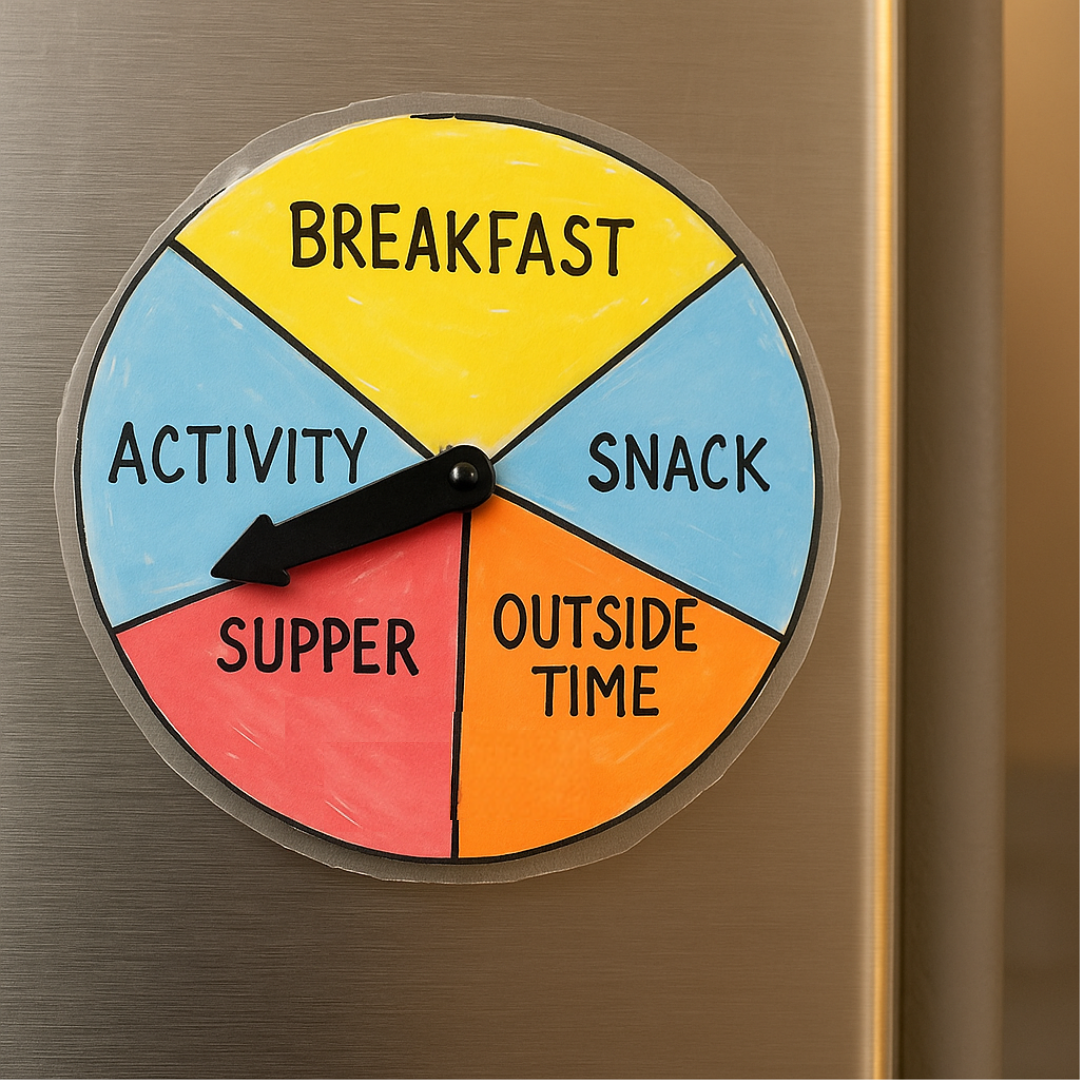
Visual schedules are great tools/resources for this. Create one that matches your child’s needs: 

  • Photo cards of each activity 
  • A written list with accompanying pictures
  • A simple checklist 

You can get creative building a velcro checklist or clock-style schedule with a pointer, but even the simplest schedule will give your child a sense of safety because they know what’s coming next.

Daily Schedule Schedule

Anchor the day with predictable activities at the beginning and end. 

Start every morning with the same activity – a walk around the block, or breakfast at the kitchen table. Repeat the same routine every evening – reading books, or singing the same songs. These anchors give stability when the rest of the day feels uncertain.

Transitions are often the hardest parts of the day. Use countdown cues to help soften transitions, for example, “When the timer rings, or when the song finishes, we’re going to clean up because it will be the end of playtime.” This gives your child time to wrap up and shift gears.

First-then prompts also help. "First we eat, then you'll color," creates a clear sequence with something to anticipate.

For children who need communication support, tools become essential. Choice boards let non-verbal kids participate in planning their day. Social stories prepare them for changes in routine. And offering them a simple way to signal “all done” prevents meltdowns and gives them agency.

Make the Day Manageable

Planning a whole day at once can feel overwhelming. 

Instead, chunk your day into morning, afternoon, and evening blocks. Sketch a loose plan for each part of the day while leaving room for flexibility. 

This approach makes it feel more manageable while still providing the structure your child needs.

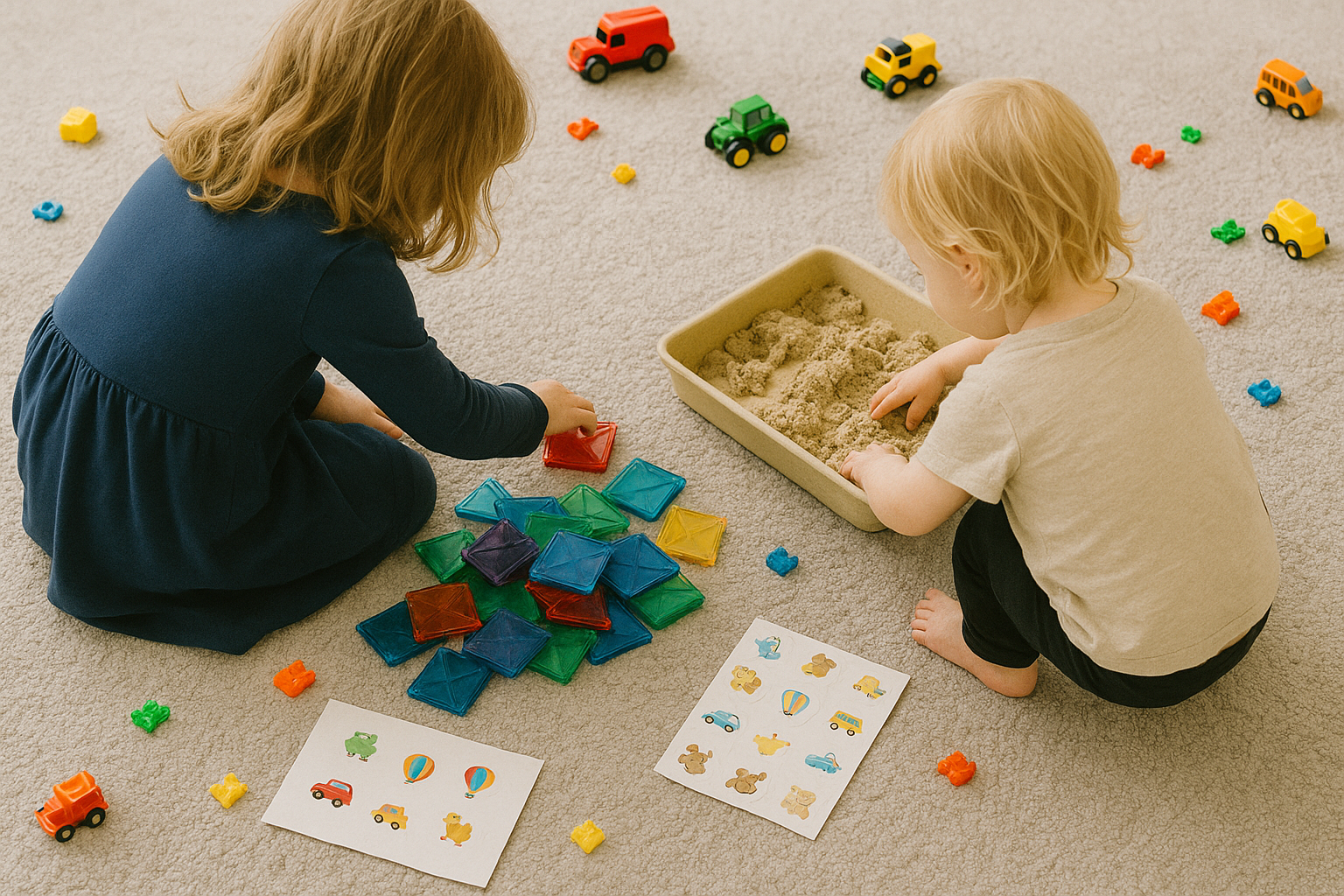
A little advance prep can save you in stressful moments. Activity bins are a huge help – fill containers with self-contained activities your child can do (at least somewhat) independently: coloring sheets, play dough, puzzles, stickers with construction paper, kinetic sand, or building blocks. Rotate the bins throughout the day to keep things fresh. When you need fifteen minutes of calm, you can simply pull out a bin without scrambling to create an activity from scratch.

If multiple family members are home, a little logistical planning helps. Designate zones so everyone has their own space — maybe one child gets the living room armchair while another uses the kitchen table. Clear boundaries help prevent that “everyone’s on top of each other,” feeling, and creates a sense of personal space for each child.

Activities that Work

When your child can’t burn off steam at school or therapy, energy-release activities at home become essential. Match them to your child’s unique sensory needs.

High-energy kids might need trampoline time or a couch-cushion obstacle courses. Children who seek sensory input often benefit from heavy work like carrying books from room to room, doing push-ups against the wall, or pushing a heavy laundry baskets. 

For those who avoid intense sensory input, gentle movement like stretches or slow dancing to calm music works better.

Everyday tasks can double as activities; kids love feeling helpful. Your child might be able to wipe down tables, unpack groceries, or hand out snacks to family members. You might need to redo the task later, but it still gives them a sense of purpose and a way to participate.

Siblings can also be a big help. Giving them buddy tasks — like reading together, playing outside, or helping with bath time — not only gives you a short breather, but also strengthens the sibling bond.

One Step at a Time

On days without childcare, keep expectations small and realistic. Break the day into blocks, anchor it with predictable routines, and keep a few simple activities ready. Remember, your child needs predictability and presence, not perfection. 

If your child felt safe, and you made it to bedtime with a shred of humor intact — call it a win. You did great.

It can get easier starting today.
OPWDD services like respite or com hab can support you in caring for your child, and encourage your child's progress and development.
Our dedicated service specialist will walk you through your options, explain eligibility, and give you clear next steps.
layer 36
asset 31
layer 37
asset 32
layer 38
asset 33
layer 36
asset 31
layer 37
asset 32
layer 38
asset 33
layer 36
asset 31
layer 37
asset 32
layer 38
asset 33
layer 37
asset 32
layer 38
asset 33
layer 38
asset 32

Auditory Sensitivity

My child is sensitive to loud noises
(e.g., sirens, vacuum cleaner).

My child seeks out specific sounds or types of music and appears calmer when listening to them.

Tactile Sensitivity

My child is irritated by certain fabrics or tags in clothing.

My child seems indifferent to sensations that are usually painful or to extreme temperatures.

Visual Sensitivity

My child is sensitive to bright or flashing lights.

My child tends to avoid eye contact.

Taste/Smell Sensitivity

My child constantly prefers bland foods and rejects foods with strong flavors or spices.

My child seeks out strong or unusual smells, such as sniffing food or objects.

Proprioceptive Sensitivity

My child prefers tight hugs or being wrapped in a blanket.

My child is unaware of body position in space (e.g., often bumps into things).

Social Sensitivity

My child becomes anxious or distressed in crowded spaces.

Movement Sensitivity

My child dislikes fast or spinning movements

Vestibular Sensitivity

My child is hesitant or resistant to climbing or balancing activities (e.g., jungle gyms, see-saws).

Please answer all questions before submitting.

Your Child’s Score is

  • 0-15

    Low Sensory Sensitivity

  • 16-30

    Moderate Sensory Sensitivity

  • 31-45

    High Sensory Sensitivity

  • 46-60

    Very High Sensory Sensitivity

0-15: Low Sensory Sensitivity

  • Interpretation: Your child exhibits low levels of sensory sensitivity, usually falling within the typical developmental range.
  • Recommendation: Generally not  a cause for concern. If you have specific worries or notice a sudden change in behavior, consult a healthcare professional for a comprehensive evaluation.
  • 0-15

    Low Sensory Sensitivity

  • 16-30

    Moderate Sensory Sensitivity

  • 31-45

    High Sensory Sensitivity

  • 46-60

    Very High Sensory Sensitivity

16-30: Moderate Sensory Sensitivity

  • Interpretation: Your child displays moderate sensory sensitivity, which may warrant intervention.
  • Recommendation: Consider sensory-friendly activities, sensory sensitive toys, or sensory sensitive clothing like noise-canceling headphones and weighted blankets to improve comfort. If symptoms persist, consult health care professionals.
  • 0-15

    Low Sensory Sensitivity

  • 16-30

    Moderate Sensory Sensitivity

  • 31-45

    High Sensory Sensitivity

  • 46-60

    Very High Sensory Sensitivity

31-45: High Sensory Sensitivity

  • Interpretation: Your child has higher than average sensory sensitivity that may interfere with daily functioning.
  • Recommendation: Seek a detailed evaluation by health care professionals for sensory integration therapy options and potential environmental modifications.
  • 0-15

    Low Sensory Sensitivity

  • 16-30

    Moderate Sensory Sensitivity

  • 31-45

    High Sensory Sensitivity

  • 46-60

    Very High Sensory Sensitivity

46-60: Very High Sensory Sensitivity

  • Interpretation: Your child demonstrates high levels of sensory sensitivity that could significantly interfere with daily life.
  • Recommendation: If your child displays this level of sensory sensitivity, it’s highly recommended that you consult with a health care professional for a multi-disciplinary assessment. You will probably be directed towards early intervention programs and specialized support.

How OPWDD Evaluations Work: A Step-by-Step Guide

Social Scripts for Kids at Family Gatherings

Hands Full Parenting: Growing Through Adolescence

Never Say Never

Recognizing CVI: Ten Characteristics

Understanding CVI

Sight Unseen

Inclusion Without Overwhelm

To Tell or Not to Tell

Rose Colored Glasses

Summer’s Secret Skills

Recognizing Early Signs of Autism

A Hug from Above

Smart, Simple Camp Prep for Kids With Special Needs

Hands Full Parenting: Sibling Rivalry & Negative Behavior

The Colors of the Spectrum

The Essential Guide to Outings with Kids with Special Needs

Hands Full Parenting: Navigating Tantrums

How Do I Get OPWDD Approval?

Indoor Winter Sensory Adventures

Defining IDD Levels and Severity

Life Skills for Individuals with Intellectual Disabilities

The Sensory-Smart Gift Guide

Spina Bifida: Early Intervention

Nothing to Hide

Hands Full Parenting: Aggression & Emotional Health

Yom Tov Transitions Made Easy

NYC’s Top Accessible Adventures

The Yom Tov Parenting Survival Guide

Understanding OPWDD Eligibility: What You Need to Know

How Direct Support Professionals Enhance Quality of Life

What Is Com Hab and How Does It Provide Individualized Support?

6 Benefits of Respite Care for Families of Kids with Special Needs

Encouragement for the First Day of School

What is Spina Bifida? An Overview

My Life in Holland

Fostering Independence in Children With IDD

Understanding IDD

What is Epilepsy?

Defining Signs of Dyslexia

Hands Full Parenting: Becoming the Therapist I Needed

Understanding Down Syndrome

Early Intervention for Down Syndrome

Our Roller Coaster Ride

Understanding Cerebral Palsy

Understanding Autism

Autism Support

Sensory Processing Sensitivity Test

Decoding Diagnostic Tests

The Ultimate Child Development Checklist

Empowering Emotional Intelligence

Managing Panic Attacks

Understanding Social Anxiety Disorder

Confronting Childhood Trauma

How to Support a Family Member with Anxiety

Understanding Separation Anxiety

Understanding Post Traumatic Stress Disorder (PTSD)

Mental Health Disorder Prevention

Combating Depression in the Elderly

Understanding Depression

Understanding Anxiety

Adult ADHD Action Plan

Helping Kids Sleep Better: Sleep Strategies for Anxiety

How OPWDD Evaluations Work: A Step-by-Step Guide

Recognizing CVI: Ten Characteristics

Understanding CVI

Sight Unseen

To Tell or Not to Tell

Rose Colored Glasses

Recognizing Early Signs of Autism

Spina Bifida: Early Intervention

A Parent's Guide to Cooking for Kids With Food Allergies

Early Intervention for Down Syndrome

Understanding Speech and Language Development

Helping Kids Sleep Better: Sleep Strategies for Anxiety

Sensory Processing Sensitivity Test

Strategies for Feeding a Picky Eater

Simple Sensory Activities to Try with Your Child

Decoding Diagnostic Tests

The Ultimate Child Development Checklist

Categories