中文
为纽约和长岛提供服务


x


- 主页
- 关于
- 服务
- 发育障碍服务适用于 OPWDD 儿童和成人
 OPWDD 指南
 家庭和社区
家庭和社区 基于站点
基于站点 住宅
住宅 金融
金融 家庭支持
家庭支持
- 心理健康服务适合儿童和成人
 为儿童提供的服务
 成人服务
成人服务
- 幼儿服务适合 0-3 岁儿童
 为 0-3 岁儿童提供的服务
- 成人急性护理适用于有认知障碍的成年人
- 成人急性护理
- 资源
- 新闻
- 职业生涯
- 联系我们
为纽约和长岛提供服务
x

It’s there in bold on your calendar: no school, sometimes for several days in a row.
You’re facing a full day with your child, without the usual structure or support, and the familiar fear creeps in, "How am I going to make it through the day?"
Unstructured time throws even the most organized parents off balance, and when you're caring for a child with special needs, the stakes are higher.
Instead of chasing a “perfect day,” focus on strategies that support you, and help you show up as your best self, whatever comes.


Children thrive on knowing what comes next. Predictability helps reduce anxiety, improves behavior, and gives kids a sense of control over their environment. Even without the usual routine, a little structure goes a long way.
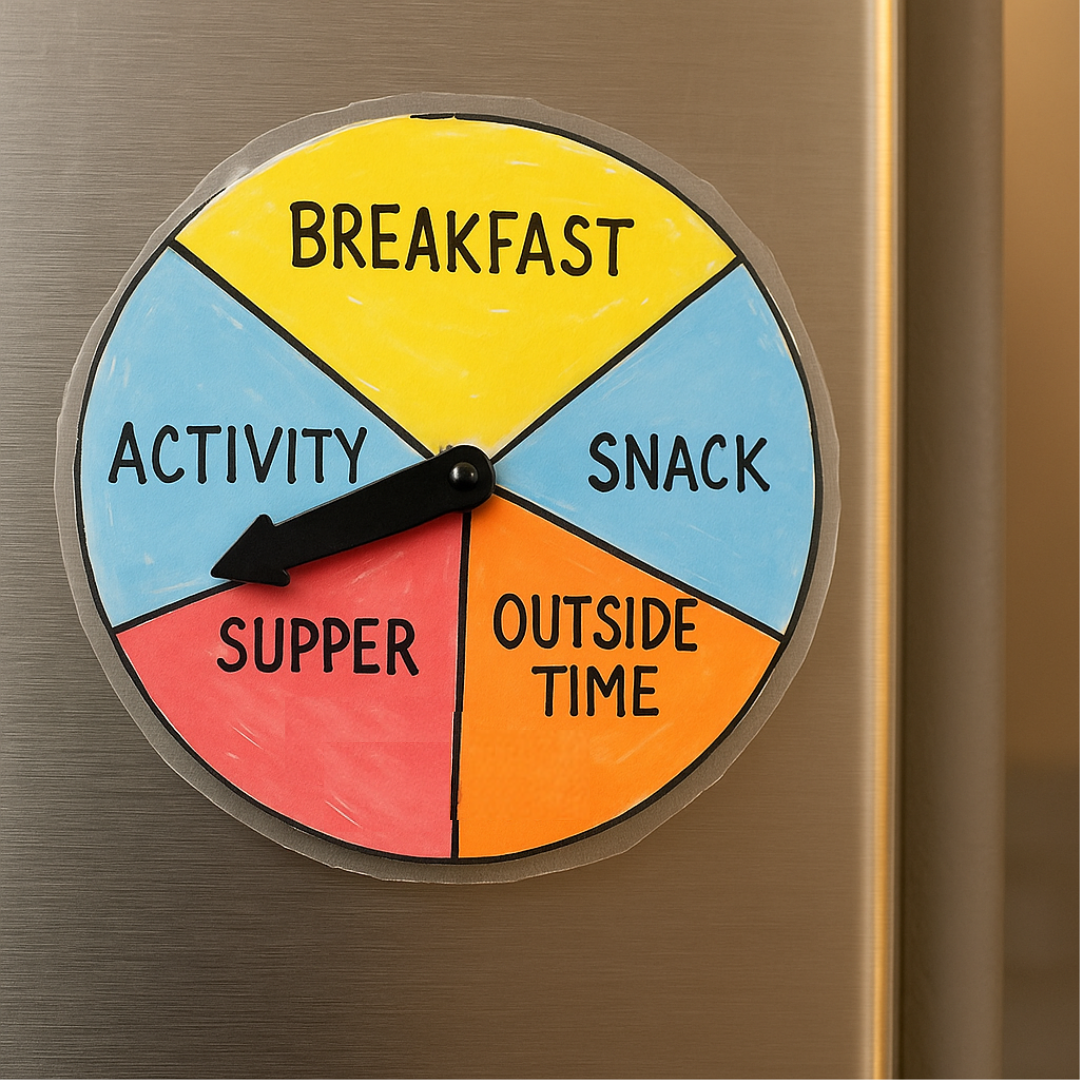
Visual schedules are great tools/resources for this. Create one that matches your child’s needs:
You can get creative building a velcro checklist or clock-style schedule with a pointer, but even the simplest schedule will give your child a sense of safety because they know what’s coming next.

Anchor the day with predictable activities at the beginning and end.
Start every morning with the same activity – a walk around the block, or breakfast at the kitchen table. Repeat the same routine every evening – reading books, or singing the same songs. These anchors give stability when the rest of the day feels uncertain.
Transitions are often the hardest parts of the day. Use countdown cues to help soften transitions, for example, “When the timer rings, or when the song finishes, we’re going to clean up because it will be the end of playtime.” This gives your child time to wrap up and shift gears.
First-then prompts also help. "First we eat, then you'll color," creates a clear sequence with something to anticipate.
For children who need communication support, tools become essential. Choice boards let non-verbal kids participate in planning their day. Social stories prepare them for changes in routine. And offering them a simple way to signal “all done” prevents meltdowns and gives them agency.
Planning a whole day at once can feel overwhelming.
Instead, chunk your day into morning, afternoon, and evening blocks. Sketch a loose plan for each part of the day while leaving room for flexibility.
This approach makes it feel more manageable while still providing the structure your child needs.
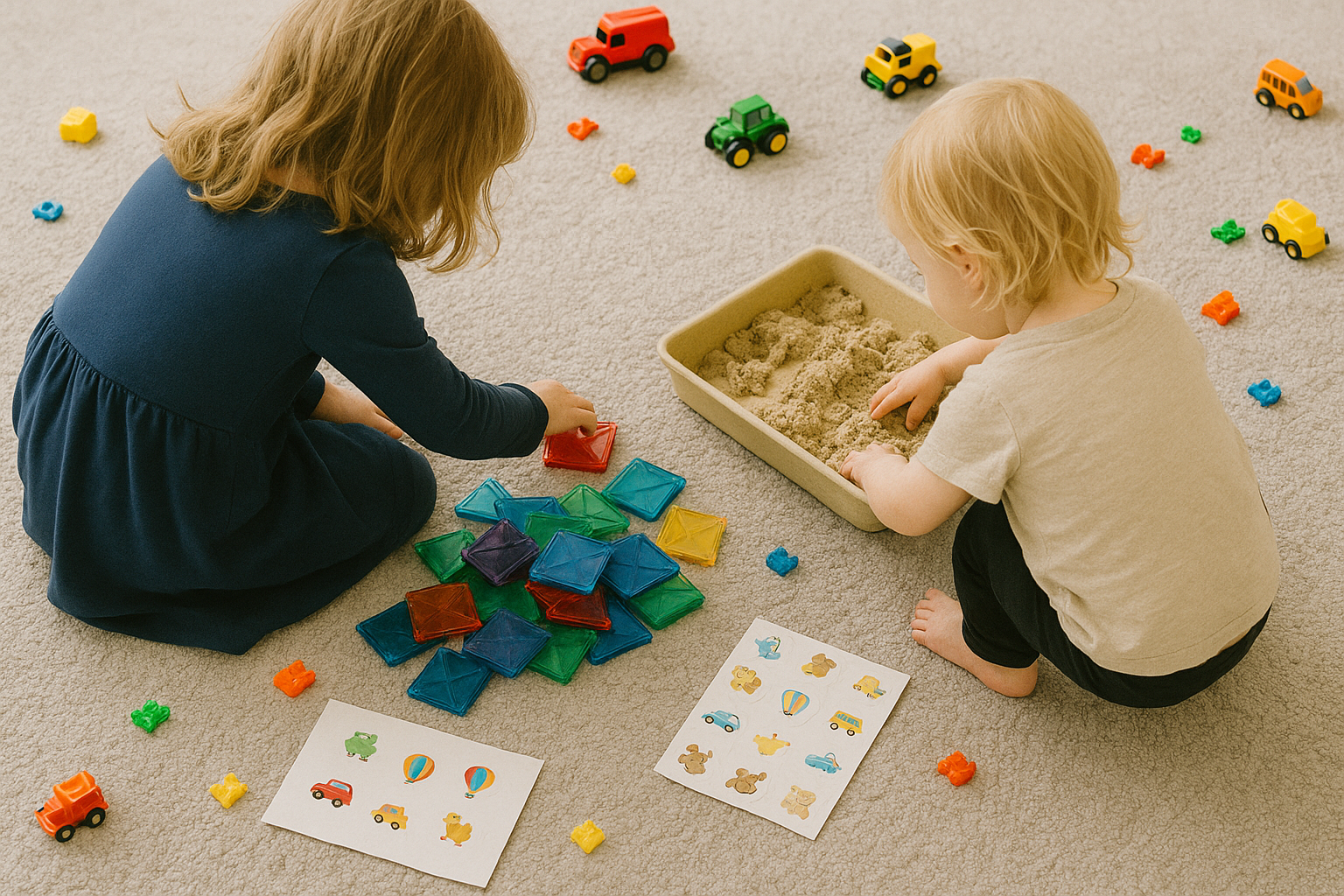
A little advance prep can save you in stressful moments. Activity bins are a huge help – fill containers with self-contained activities your child can do (at least somewhat) independently: coloring sheets, play dough, puzzles, stickers with construction paper, kinetic sand, or building blocks. Rotate the bins throughout the day to keep things fresh. When you need fifteen minutes of calm, you can simply pull out a bin without scrambling to create an activity from scratch.
If multiple family members are home, a little logistical planning helps. Designate zones so everyone has their own space — maybe one child gets the living room armchair while another uses the kitchen table. Clear boundaries help prevent that “everyone’s on top of each other,” feeling, and creates a sense of personal space for each child.
When your child can’t burn off steam at school or therapy, energy-release activities at home become essential. Match them to your child’s unique sensory needs.
High-energy kids might need trampoline time or a couch-cushion obstacle courses. Children who seek sensory input often benefit from heavy work like carrying books from room to room, doing push-ups against the wall, or pushing a heavy laundry baskets.
For those who avoid intense sensory input, gentle movement like stretches or slow dancing to calm music works better.
Everyday tasks can double as activities; kids love feeling helpful. Your child might be able to wipe down tables, unpack groceries, or hand out snacks to family members. You might need to redo the task later, but it still gives them a sense of purpose and a way to participate.
Siblings can also be a big help. Giving them buddy tasks — like reading together, playing outside, or helping with bath time — not only gives you a short breather, but also strengthens the sibling bond.
On days without childcare, keep expectations small and realistic. Break the day into blocks, anchor it with predictable routines, and keep a few simple activities ready. Remember, your child needs predictability and presence, not perfection.
If your child felt safe, and you made it to bedtime with a shred of humor intact — call it a win. You did great.



感官灵敏度低
中等感官敏感度
感官灵敏度高
非常高的感官灵敏度
0-15:感官敏感度低
感官灵敏度低
中等感官敏感度
感官灵敏度高
非常高的感官灵敏度
16-30:中等感官敏感度
感官灵敏度低
中等感官敏感度
感官灵敏度高
非常高的感官灵敏度
31-45:高感官灵敏度
感官灵敏度低
中等感官敏感度
感官灵敏度高
非常高的感官灵敏度
46-60:非常高的感官灵敏度


© 2025 金斯县的哈马斯皮克,版权所有