
汉堡菜单图标菜单关闭图标

Ending the School Year Strong

layer 41

Navigating the Last Days of School

The final bell of the school year can bring a mix of emotions,  from relief to regret to gratitude. For families of children with special needs, those feelings are often amplified.

Your child may have had a hard year — or perhaps it was wonderful. However the year played out, hopefully, over these last ten months, they also picked up new skills and connected with classmates, therapists, the world around them.

There may be new friendships you're celebrating, sadness over moving on from providers you've built warm relationships with, and unmet goals you're grieving.

Before the backpacks get shelved, here are some ways to help your child close the year feeling good about where they've been — and excited about where they're going 

Say Goodbye with Intention

Instead of letting the year slip away into summer, take a moment to acknowledge the people and places that made the year possible.

Say thanks

Verbal children can record a 20-second video or voice note of them saying thank you to their teacher or aide. 

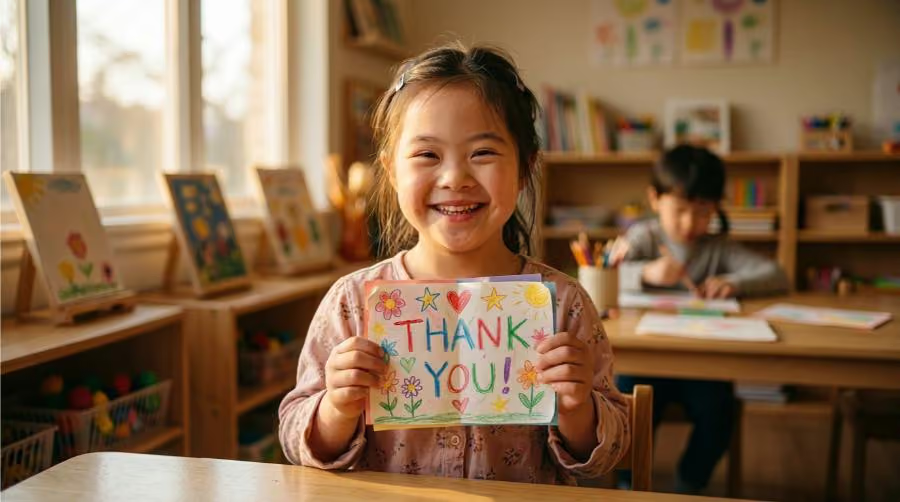
Non-verbal kids can take a picture holding a colorful “thank you” sign or deliver a card they helped decorate. 

Gifts can also express the gratitude you feel, and you can involve your child in wrapping and delivering it.  Some ideas: 

  • Personalized tote bag – a thoughtful pick for a therapist who carries supplies
  • Quality water bottle – always appreciated by hardworking caregivers
  • Home diffuser – a calming gift that enhances their home
  • Gift card – a simple, flexible option that lets them choose

Capture the year

  • Snapshot: Take a picture of your child doing something they worked hard on this year – next to an ABC wall they mastered, pumping on a swing, or with a piece of art they created. It’s a visual reminder of “I can do hard things.” 
  • Legacy scrapbook: For children who struggle with the "out of sight, out of mind" nature of transitions, a small photo album can be an anchor. Include pictures of their teacher, their favorite therapist, and the school bus. Looking through it over the summer helps keep those positive associations alive.

Mark the ending

Transitions are easier when they’re clear. Give your child a physical way to signal the close of the school year.

  • The final run: On the last day, if possible,  let your child do one activity you've chosen together as your way of closing the chapter, whether it’s a last chance to play on the playground or a final high-five with the security guard.
  • The last-day keepsake: Snap a photo of your child holding a board with the essentials: their age, their teacher’s name, their "best memory," and one thing they learned. It’s a cute photo – and a way for your child to process their own growth.
  • A letter to "Future Me": Sit down together and write a short letter to "Next Year Me." Include things like, "You were really brave when the fire alarm went off this year," or "Remember that Mrs. G helps you when you feel frustrated." Tuck it away to be opened on the first day of school in the fall.

Encouraging Wrap Up

Words matter, especially at the end of the year. Offering your child simple affirmations can help them end the year feeling good about themselves and ready for what's next.

Repeat an affirmation together at dinner, on the drive home, or right before bed.

Choose from one of these, or craft your own:

  • "I’m brave enough to try hard things."
  • "I grow a little more every single day, even when I can't see it."
  • "I am exactly who I'm supposed to be."
  • “I did awesome things this year.”

Parents, you also did a lot this year. Take the time to consider (and repeat) the perspective shifts you want to take with you.

A few worth holding onto:

  • "I don't have to do this perfectly to do it with love."
  • "Showing up, again and again, is enough — and I did it every day."
  • “I’m the parent my child needs, always.”
  • "The goals we didn't reach don't erase everything we did."
  • "We moved forward this year — not always on paper, but in ways that count."

Setting Up Next Year’s Success

And when you're ready to look ahead, the best way to prepare for the upcoming year is to make sure what worked this year doesn't get lost in the handoff.

  • Audit the Wins: Take an hour to organize this year's IEPs, progress reports, and work samples that capture what your child can do.
  • The "What Works" Cheat Sheet: Create a simple, one-page bulleted list for next year’s teacher.
    • Modifications: "He does better with a visual timer."
    • Regulation: "When she starts to hum, she needs a break."
    • Interests: "If you talk about trains, you’ll have his full attention."
  • The Smooth Handoff: Ask current teachers or therapists if they’d be willing to write a "pro tip" for the next person in their role. Often, the staff-to-staff connection provides insights that aren't captured in a formal evaluation.

You Showed Up All Year

Your child worked so hard this year. They learned to navigate a complex world, and every win is a massive achievement.

And as the parent, you worked hard too. You were the advocate, the translator, the steady hand. Whether this year was a triumph or a series of "let's just get through it" days, you showed up.

Whatever this summer holds, you'll be building on the work you’ve done all year.

layer 36
asset 31
layer 37
asset 32
layer 38
asset 33
layer 36
asset 31
layer 37
asset 32
layer 38
asset 33
layer 36
asset 31
layer 37
asset 32
layer 38
asset 33
layer 37
asset 32
layer 38
asset 33
layer 38
asset 32

听觉灵敏度

我的孩子对大声的声音很敏感
(例如,警报器、吸尘器)。

我的孩子会寻找特定的声音或音乐类型,听它们时会显得更加平静。

触觉灵敏度

我的孩子对衣服上的某些面料或标签感到刺激。

我的孩子似乎对通常很痛苦的感觉或对极端温度漠不关心。

视觉灵敏度

我的孩子对明亮或闪烁的灯光很敏感。

我的孩子倾向于避免眼神交流。

味觉/气味敏感度

我的孩子经常喜欢平淡的食物,拒绝口味或香料浓烈的食物。

我的孩子会寻找强烈或不寻常的气味,例如嗅探食物或物体。

本体感受灵敏度

我的孩子更喜欢紧紧的拥抱或被包裹在毯子里。

我的孩子不知道太空中的身体位置(例如,经常碰到东西)。

社交敏感度

我的孩子在拥挤的空间里变得焦虑或痛苦。

运动灵敏度

我的孩子不喜欢快速或旋转的动作

前庭敏感度

我的孩子对攀岩或平衡活动(例如丛林体育馆、跷跷板)犹豫不决或不愿意。

Please answer all questions before submitting.

Your Child’s Score is

  • 0-15

    感官灵敏度低

  • 16-30

    中等感官敏感度

  • 31-45

    感官灵敏度高

  • 46-60

    非常高的感官灵敏度

0-15:感官敏感度低

  • 口译: 你的孩子表现出低水平的感官敏感度,通常处于典型的发育范围内。
  • 推荐: 通常不令人担忧。如果您有特定的担忧或发现行为突然改变,请咨询医疗保健专业人员进行全面评估。
  • 0-15

    感官灵敏度低

  • 16-30

    中等感官敏感度

  • 31-45

    感官灵敏度高

  • 46-60

    非常高的感官灵敏度

16-30:中等感官敏感度

  • 口译: 你的孩子表现出中等的感官敏感度,这可能需要干预。
  • 推荐:考虑感官友好型活动、感官敏感玩具或感官敏感衣物,例如降噪耳机和加重毛毯,以提高舒适度。如果症状持续存在,请咨询医疗保健专业人员。
  • 0-15

    感官灵敏度低

  • 16-30

    中等感官敏感度

  • 31-45

    感官灵敏度高

  • 46-60

    非常高的感官灵敏度

31-45:高感官灵敏度

  • 口译: 你的孩子的感官敏感度高于平均水平,可能会干扰日常功能。
  • 推荐: 寻求医疗保健专业人员的详细评估,以了解感官整合疗法的选择和潜在的环境变化。
  • 0-15

    感官灵敏度低

  • 16-30

    中等感官敏感度

  • 31-45

    感官灵敏度高

  • 46-60

    非常高的感官灵敏度

46-60:非常高的感官灵敏度

  • 口译: 你的孩子表现出很高的感官敏感度,可能会严重干扰日常生活。
  • 推荐:如果你的孩子表现出这种感官敏感度,强烈建议你咨询医疗保健专业人员进行多学科评估。您可能会被引导到早期干预计划和专业支持。

双手育儿:创造坚实的结构

告别迷茫:了解服务获取流程

让 Purim 为你的孩子服务

Self-Direction vs. Traditional OPWDD Services

双手育儿:帮帮你的早产儿壮壮成长

Understanding Intervention Options

OPWDD 评分估计数的工作原理:分步指南

孩子们在家庭聚会上的社交剧本

双手育儿:青春期成长

永远不会说永远

Recognizing CVI: Ten Characteristics

Understanding CVI

用跳舞

Sight Unseen

Structure on Days Off

Inclusion Without Overwhelm

To Tell or Not to Tell

Rose Colored Glasses

夏天的秘密技能

识别自闭症的早期迹象

来自上方的拥抱

为有特殊需要的孩子准备智能简便的夏令营

通往潜力的途径第 4 部分

光谱的颜色

有特殊需要的孩子一起郊游的基本指南

如何获得 OPWDD 批准?

室内冬季感官探险

定义 IDD 级别和严重性

智障人士的生活技能

Sensory-Smart 礼物指南

脊柱裂:早期干预

没什么好隐瞒的

通往潜在之路第 2 部分

Yom Tov 过渡变得简单

纽约市最畅玩的冒险之旅

Yom Tov 育儿生存指南

了解 OPWDD 资格:你需要知道的

直接支持专业人员如何提高生活质量

什么是Com Hab,它如何提供个性化支持?

临时护理对有特殊需要的孩子的家庭的6大好处

对开学第一天的鼓励

什么是脊柱裂?概述

我在荷兰的生活

促进缺碘症患儿的独立性

了解 IDD

什么是癫痫?

定义阅读障碍的症状

通往潜在之路第 1 部分

了解唐氏综合症

唐氏综合症的早期干预

我们的过山车之旅

了解脑瘫

了解自闭症

自闭症支持

感官处理灵敏度测试

解码诊断测试

儿童成长清单

告别迷茫:了解服务获取流程

我的孩子的宗教信仰是强迫症吗?

增强情商

管理恐慌发作

了解社交焦虑症

面对童年创伤

如何支持患有焦虑症的家庭成员

了解分离焦虑 |

了解创伤后应激障碍(PTSD)

精神障碍预防

对抗老年人的抑郁症

了解抑郁症

了解焦虑

成人注意力缺陷多动障碍行动计划

焦虑儿童的睡眠策略

双手育儿:帮帮你的早产儿壮壮成长

Understanding Intervention Options

OPWDD 评分估计数的工作原理:分步指南

Recognizing CVI: Ten Characteristics

Understanding CVI

Sight Unseen

To Tell or Not to Tell

Rose Colored Glasses

识别自闭症的早期迹象

脊柱裂:早期干预

食物过敏儿童家长烹饪指南

唐氏综合症的早期干预

了解语音和语言发展

焦虑儿童的睡眠策略

感官处理灵敏度测试

喂你的挑食者

简单的感官活动

解码诊断测试

儿童成长清单

类别

未找到任何物品。
未找到任何物品。
未找到任何物品。