Not Natural, But Achievable
At its core, what you’re really asking is: "If G-d created me with a natural difficulty in a certain skill set — one that's necessary for healthy, functional life — am I required to work on it even as I’m consumed with other tasks? And, if so, how?"
We often make the mistake of assuming that people who excel are simply wired that way. We look at someone who is structured, kind, or patient, and we tell ourselves: that's just how they were born.
While it's true that certain skills come more easily to some than others, for the vast majority of people, one truth is constant: success is the result of hard work.
Entropy — the natural tendency toward disorganization — is our default state.
Think of a pane of glass: one blow shatters it into a thousand pieces, but gluing it back together, if it's even possible, takes enormous effort.
Or consider a single drop of food coloring falling into a glass of water. Within seconds, it spreads through the entire glass. But to reverse the process? Get the color back into a single drop? Impossible.
Disorder happens effortlessly. Order requires work.
This is precisely why we must constantly fight entropy. It’s so easy to slide back into our natural tendencies — and that pull is relentless. “Easier said than done,” can be a dangerous expression when it becomes an excuse. The fact that something is hard doesn’t justify leaving it undone.
And here's what's more important to remember: if you were given the role of raising these children, you were also given the abilities to do so. So let's figure out how.

Caring for a child with special needs affects everyone.
Our Siblings Are Special Too guide shares ten grounded, actionable ways to support siblings with sensitivity.
Same, Same, Same
When you look at the three struggles you described — structure, persistence, and consistency — you might assume they're three separate problems to solve. But look a little closer, and you'll find they're all rooted in the same underlying skill: the ability to respond to the same stimulus the same way, every single time.
This is the engine behind habit formation and self-development of any kind. It's what makes a full laundry hamper automatically trigger the thought: time to put in a load. No need to deliberate, no talking yourself into it, just a reliable response.
That kind of structure doesn't suddenly appear. It's built through conditioning over time — which is exactly why it's the foundation of all training and growth.
For some people, the brain is naturally wired to respond to each stimulus in a steady, predictable way. But for others, distraction gets in the way. And when distraction steps in, a person ends up responding differently each time the same situation arises, slowly chipping away at their consistency.
To make things harder, once consistency is broken, climbing back onto that wagon is even more difficult than it was to get on in the first place.
So the most effective way — really, the only way — to work on consistency is to zero in on one surprisingly simple idea: sameness.
Sameness is the cement that will hold your home together.
Choosing Focus
Your question seems to suggest that working on your own consistency and working on your children's behavior are two separate battles that can't be fought at the same time. But that's actually not the case.
You can absolutely work on both — because the progress you make on your own self-development won’t happen in a vacuum. Your children are observing. And more than observing, they're also absorbing.
In fact, you can’t teach your children something you haven’t mastered, so if you make a commitment to working on your own personal development, your children will benefit from it.
As for how to actually build a new habit, research and experience both point to the same answer: 40 days. That's how long it takes to move something from effortful to natural.
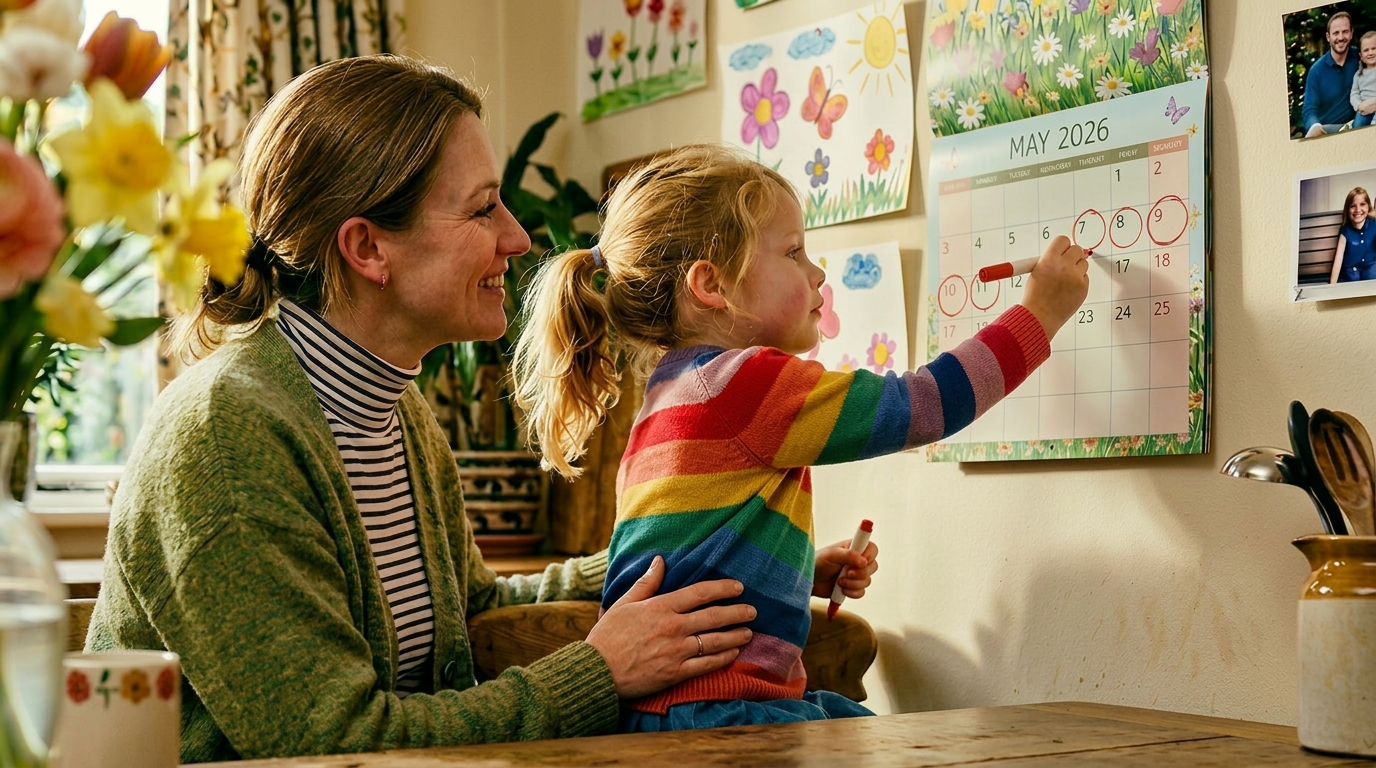
And yes, for someone who already struggles with consistency, that's no small task. So make it concrete: use a planner or calendar and mark off each day you follow through. Reward yourself along the way. Watch the number climb — and notice how good it feels as you inch closer to 40.
I'll share something personal. There was a time when exercise was the first thing I'd push off and the last thing I'd get around to. So I made a commitment to do it every day for 40 days — and I stuck to it.
By the time I reached day 40, something had shifted. I didn't want to skip. It had stopped feeling like a chore and started feeling like who I was.
That's the power of 40 days.
Skill Sets
So which areas should a mother prioritize? What will have the greatest impact on her children? Here are the four that matter most:
- Frustration tolerance. This means not shouting, not hitting, and not responding to difficult moments in ways that are frightening or harmful. How a mother handles her own frustration sets the emotional temperature of the entire home.
- Nurturing through food. One warm, cooked meal a day. It sounds simple, but don't underestimate it. A hot homemade meal makes a child feel safe, loved, and cared for.
- A reliable environment. Children need to know they can count on their parents for their basic needs — clean clothes available every morning, a packed lunch, help with homework when it's needed.
- Bedtime. Bedtime closes the day, and it’s a potent time during which expressions of love create feelings of safety. A consistent routine helps children master the skill of separating from their parents — an important prerequisite for falling asleep.
There are tens of skills that are beneficial for parents to model, and surely some additional ones that you assumed to be “musts.” But if you can check off the above boxes, you’ll have a solid foundation in place.
If you're not there yet, that's okay — but each of these four areas deserves focused attention, ideally with the support of a coach. In fact, I tell the families I work with that they're ready to begin my Hands Full parenting program once they've tracked 40 or more days of consistently maintaining these four elements. Because safety and love are the launchpad for everything that comes next.
And remember, you might mess up on day 29. That's okay. Pick yourself up and start counting again.
You’ll get to day 40, you’ll see!







 OPWDD Guidance
 Home and Community
 Site-Based
 Residential
 Financial
 Family Support
 Services for Children
 Services for Adults
 Services for Children 0-3


