



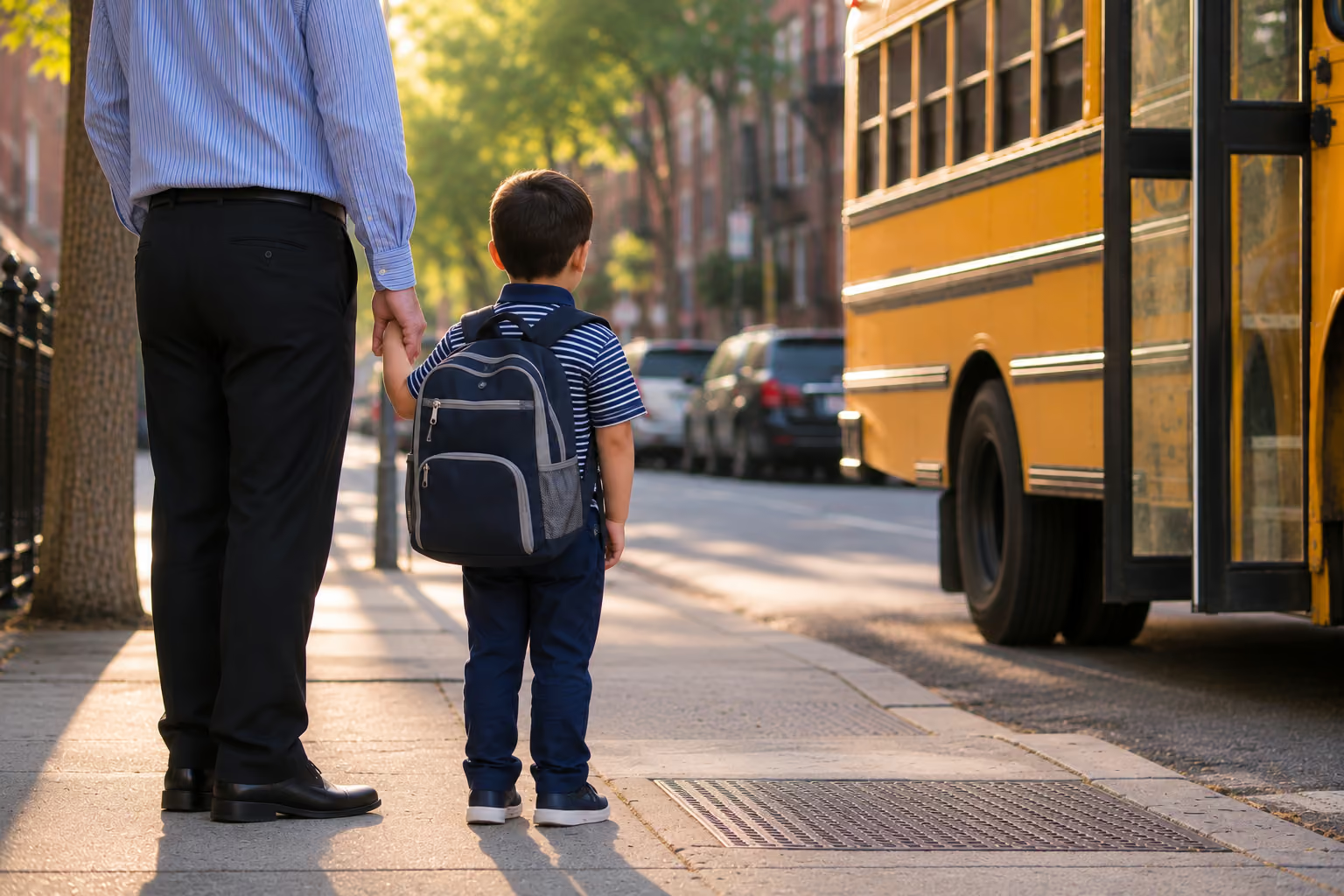
For many families, the bus is the hardest part of back-to-school. For many families, the bus is the hardest part of back-to-school. It’s loud, crowded, and unpredictable — and your child has to get on and off twice a day. For a child who's easily overwhelmed, the ride can set the tone for everything that follows.
If your child – or you – are worried about the bus, that’s perfectly understandable. Most of the fear comes from uncertainty, and not knowing what's coming. You can't make the ride disappear, but you can make it predictable.
Rehearse the Bus Story
A bus story is a few short pages your child reads until the ride feels familiar. One idea per page, with real photos where you can. Read it at bedtime the week before school and each morning the first week.
My bus is number 12. It is yellow.
My driver is Mr. Lee. Miss Rosa helps on the bus.
I wait at the corner with Mommy. The bus comes in the morning.
I climb the steps and sit in my seat. I buckle up.
The bus is loud sometimes. I can put on my headphones.
The bus brings me to school.
At the end of the day, I go back on the bus.
Mommy is waiting for me outside and helps me off the bus when I get home.
Fill in your child's real driver, stop, and bus number as soon as you have them. If you can, walk to the stop together a few times before the first day. For children with significant anxiety, start by looking at a parked bus from a distance, and then move a little closer each time.
Give the Driver and Attendant a Head Start
The driver and attendant are your child's safety net for the ride. They’re the one who will notice when your child is struggling and step in, so give them what they need on a single page they can keep on the bus:
- Your child's name and photo
- How your child communicates (words, gestures, a device, or a mix)
- What calms your child (a song, a phrase, deep pressure)
- What sets your child off (sudden noise, being rushed)
- Medical needs, allergies, and medications
- Who to call, in order of priority
While you're at it, ask about seating. A spot near the attendant or away from the door helps many kids, and keeping the same seat every day removes some of the uncertainty. Give your child one clear rule to hold onto, such as staying buckled until the driver says it's okay to stand.
Pack a Comfort Kit
A small kit, light enough to carry every day, can help tame most of what makes the ride hard on the senses:
- Noise-canceling headphones for the engine
- A fidget toy
- One familiar comfort object
- A hat or sunglasses if bright windows bother your child
- Buses run hot and cold, so a layer your child can put on or take off helps too.
When the Ride is Rough
Even with all of this in place, hard days happen. Your child might cry, refuse to board, or come home upset after a ride that was supposed to go fine. When that happens, look at what went wrong — a substitute driver, a change in the route, too much noise that day — and try to adjust what you can.
If your child is refusing to get on the bus, try scaling back. Drive them for the first few days while you keep practicing the bus story at home. Some kids need a few successful short rides before the full route feels manageable. If you can, ask the school for a chance to meet the driver and attendant before the first day; even a short introduction can minimize the fear of traveling with an unfamiliar adult.
If your child is coming home distressed, talk to the driver or attendant about what happens during the ride, and ask the school whether anything went wrong at drop-off. Sometimes the problem isn't the bus ride itself, but what's happening right before or right after it.
If the pattern continues, it's worth questioning whether the current setup is the right fit. Some children do better with a shorter route, a smaller vehicle, or a dedicated aide on the bus.
Your Child's Transportation Rights
If your child has an IEP, transportation is one of the related services the team can include — things like a shorter ride, a 1:1 paraprofessional to accompany him, air conditioning, or a smaller vehicle, provided at no cost to you.
If transportation isn't already part of your child's plan, you can request an IEP meeting to discuss it.
If your child doesn't have an IEP but has a documented disability, ask the school's 504 coordinator whether transportation accommodations are available under a 504 plan. And if your child has medical needs affecting the ride, your doctor can submit a Medical Accommodations Request Form directly to the school.
What Happens Next
You've got the story, the driver sheet, and the kit ready. From here, it's mostly trial and error.
The first week will tell you a lot. Maybe the headphones help but the fidget doesn't get touched. Maybe your child does fine at pickup but comes home wiped out. Maybe your child looks forward to the bus rides.
Take note of what you see and adjust from there — swap out what's not working, ask the driver if there’s something you forgot to put on the sheet, have a special ritual you do when you part at the bus stop.
None of this makes the first ride effortless, but it replaces a morning of unknowns with some grounding routines. You know your child better than anyone, and a little groundwork goes a long way toward a calmer first day.
Frequently Asked Questions
Can I track the bus in real time?
Many districts and bus companies offer an app or portal that shows the bus's live location, which can take some of the guesswork out of waiting at the stop. Ask your school or transportation office whether this is available for your route.
What happens if my child is sick and misses the bus one day?
Call the school or transportation office as soon as you know, so they're not waiting at an empty stop. If your child will be out for several days, let the school know so they can pause the pickup until you're ready to resume.
Does my child need a doctor's note to get bus accommodations?
Not always. If your child already has an IEP, transportation accommodations can go through the IEP team directly. A doctor's note (via the Medical Accommodations Request Form) is the route to use when your child doesn't have an IEP, or when the accommodation is specifically medical, like needing an air-conditioned bus for a health condition.
My child can't tolerate a regular school bus. Are there other options?
Some children qualify for specialized transportation through their IEP, which might mean a smaller bus, a shorter route, or a vehicle with fewer students. Talk to your child's school team about what's available.